Pacific WatchPacific Watch
OverviewStorm ReliefWeatherWindSurf & TidesMaritimeAir QualityWater QualityRainfallDroughtMesonet StationsClimate HistoryTsunamiHurricane TrackerSeismicVolcanoesWildfiresBox JellyfishPower OutagesTraffic & Road ClosuresTheBus DisruptionsCamerasInternet, TV & CellularDamsStreamsReservoirsHealthNews & RadioSocialShelters & EvacuationTsunami ZonesFlood Hazard MapWarning SirensChecklistBug Out BagEnergy PlannerKids PrepPet PrepHandbooksGarden PlannerEmergency Supplies
What's NewAboutSettings
Pacific WatchPacific Watch
OverviewStorm ReliefWeatherWindSurf & TidesMaritimeAir QualityWater QualityRainfallDroughtMesonet StationsClimate HistoryTsunamiHurricane TrackerSeismicVolcanoesWildfiresBox JellyfishPower OutagesTraffic & Road ClosuresTheBus DisruptionsCamerasInternet, TV & CellularDamsStreamsReservoirsHealthNews & RadioSocialTsunami ZonesFlood Hazard MapWarning SirensChecklistBug Out BagEnergy PlannerKids PrepPet PrepHandbooksGarden PlannerEmergency Supplies
What's NewAboutSettings
Ko-fiLove the app?Buy me a coffee
OverviewEmergencyWeather

Hurricane Tracker

Central Pacific Hurricane Center (CPHC)

0active storms
Season starts in 55 days (Jun 1)
NHC

7-Day Tropical Outlooks

Last updated at end of 2025 season. New outlooks begin June 1.

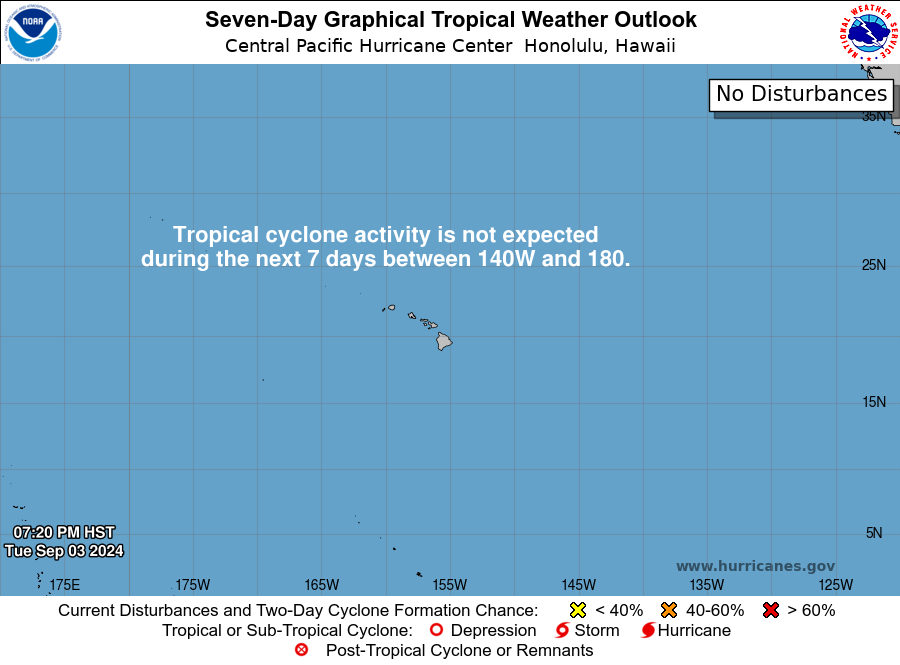
Central Pacific 7-Day Tropical Outlook

Central Pacific — updated every 6 hours by CPHC

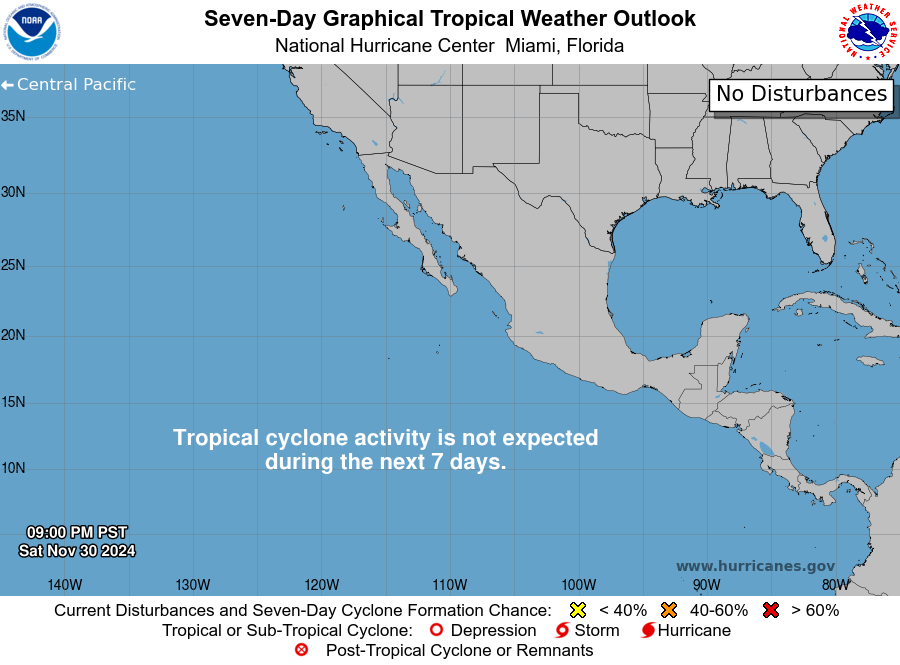
Pacific Wide 7-Day Tropical Outlook

Pacific Wide — Eastern and Central Pacific basins

Sea Surface Temperatures

Ocean heat that fuels tropical cyclone development

Loading SST map...

Why SST matters: Tropical cyclones need ocean water of at least 26.5°C (80°F) to form and intensify. Warmer water provides more energy through evaporation, fueling stronger storms.

El Niño effect: During El Niño years, warm water shifts eastward into the Central Pacific, increasing hurricane risk near Hawaii. The warm pool expands, creating favorable conditions for tropical cyclone development in areas that are normally too cool.

Areas shown in red/orange (28°C+) have the most energy available for storm development. The transition zone near 26.5°C (shown in yellow) marks the boundary where tropical cyclone formation becomes possible.

2026 Season Outlook

Potential Super El Niño — Elevated Hurricane Risk for Hawaii

As of March 2026, La Niña is fading and a transition to ENSO-neutral is expected within the next month. NOAA's Climate Prediction Center forecasts El Niño emerging by mid-2026, with a 62% chance by June–August and a 1-in-3 chance of reaching "strong" status (Niño-3.4 ≥ +1.5°C) by Oct–Dec. A large amount of heat in the subsurface ocean supports El Niño formation. ECMWF models suggest it could rival the strongest events on record (1982-83, 1997-98, 2015-16).

What this means for Hawaii: El Niño events drive warm water across the subtropical and tropical eastern Pacific through the Pacific Meridional Mode. This creates conditions favorable for more tropical storms and hurricanes tracking near or over the Hawaiian Islands during the Jun–Nov season. The 2015-16 super El Niño brought record Central Pacific hurricane activity.

Sources:NOAA CPC ENSO Discussion Copernicus/ECMWF Seasonal Forecast

Prepare Now

Don't wait for a hurricane to prepare

With an elevated hurricane season ahead, now is the time to prepare — not when a storm is bearing down. Stock up on supplies, review your evacuation zone and shelter locations, and make a family plan while stores are stocked and you can think clearly.

Emergency HandbooksSupply ChecklistEvacuation ZonesShelter LocationsEnergy Planner

Resources

National Hurricane Center

Official NHC forecasts and advisories

Central Pacific Hurricane Center

Hawaii-focused tropical cyclone forecasts

NWS Honolulu

Local weather forecasts and warnings

Source:NOAA National Hurricane Center